
In a competitive job market, your professional photo is no longer optional—it is a key part of your personal brand. Whether you’re applying for jobs, networking on LinkedIn, or building credibility in your industry, your photo plays a major role in how you are perceived. Recruiters often form an impression within seconds, and your image can influence whether they explore your profile further.
For men, professional photo poses should communicate confidence, approachability, and reliability without appearing forced or overly styled. This guide explains the most effective professional photo poses for men, specifically for LinkedIn profiles and resumes, and helps you understand why each pose works, when to use it, and how to execute it correctly.
A professional photo poses for men significantly improves visibility and trust. LinkedIn profiles with photos receive more views, connection requests, and recruiter engagement compared to profiles without images. On resumes, a clean and professional photo can reinforce credibility, especially in client-facing or leadership roles.
Your photo signals:
An unprofessional image—such as a selfie, casual vacation photo, or poorly lit picture—can quietly weaken even the strongest resume or LinkedIn profile.
Before choosing a specific pose, it’s important to understand the foundational principles that apply to all professional headshots and portraits.
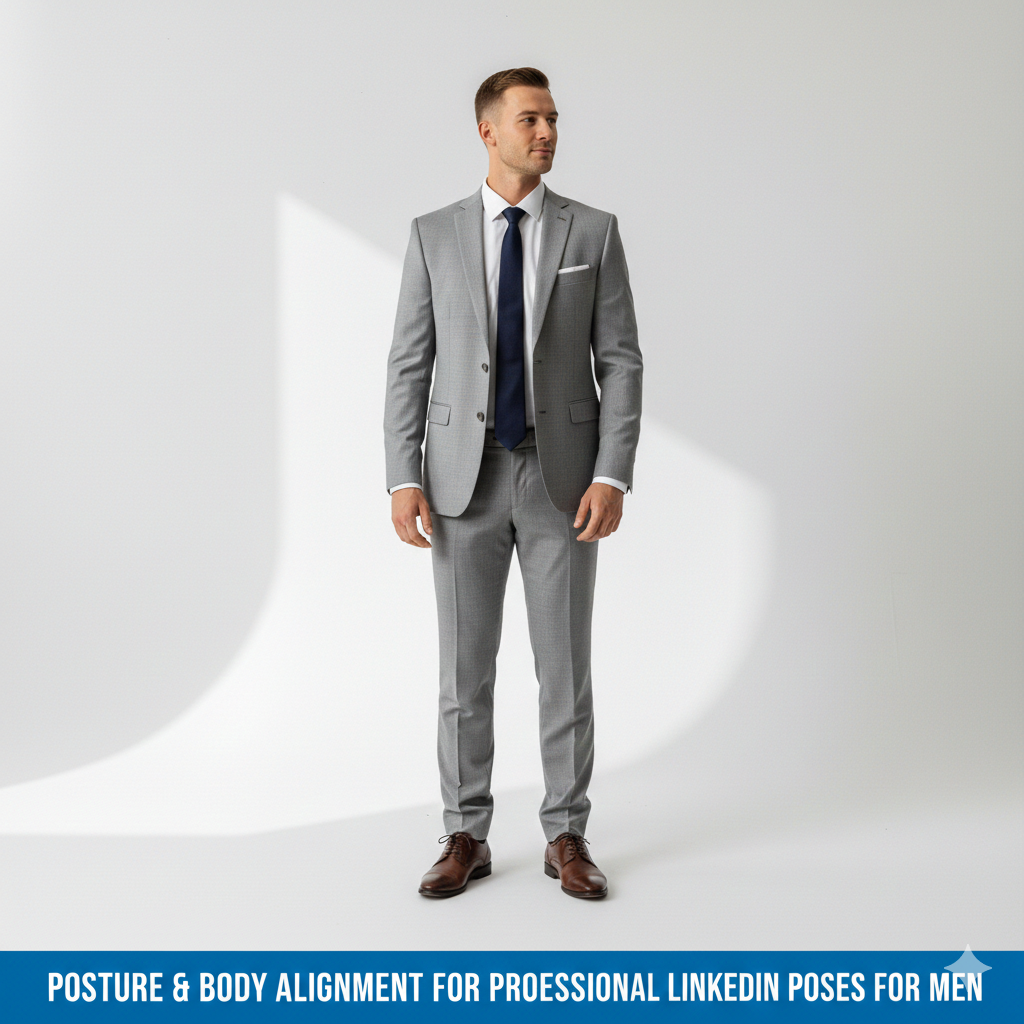
Strong posture immediately communicates confidence and competence. Standing or sitting upright with relaxed shoulders prevents a stiff or uncomfortable appearance. Avoid slouching, leaning excessively, or tilting your head too far in any direction.
A neutral expression with a slight, natural smile works best for professional settings. Over-smiling can appear casual, while a completely serious expression may come across as unapproachable. The goal is calm confidence.
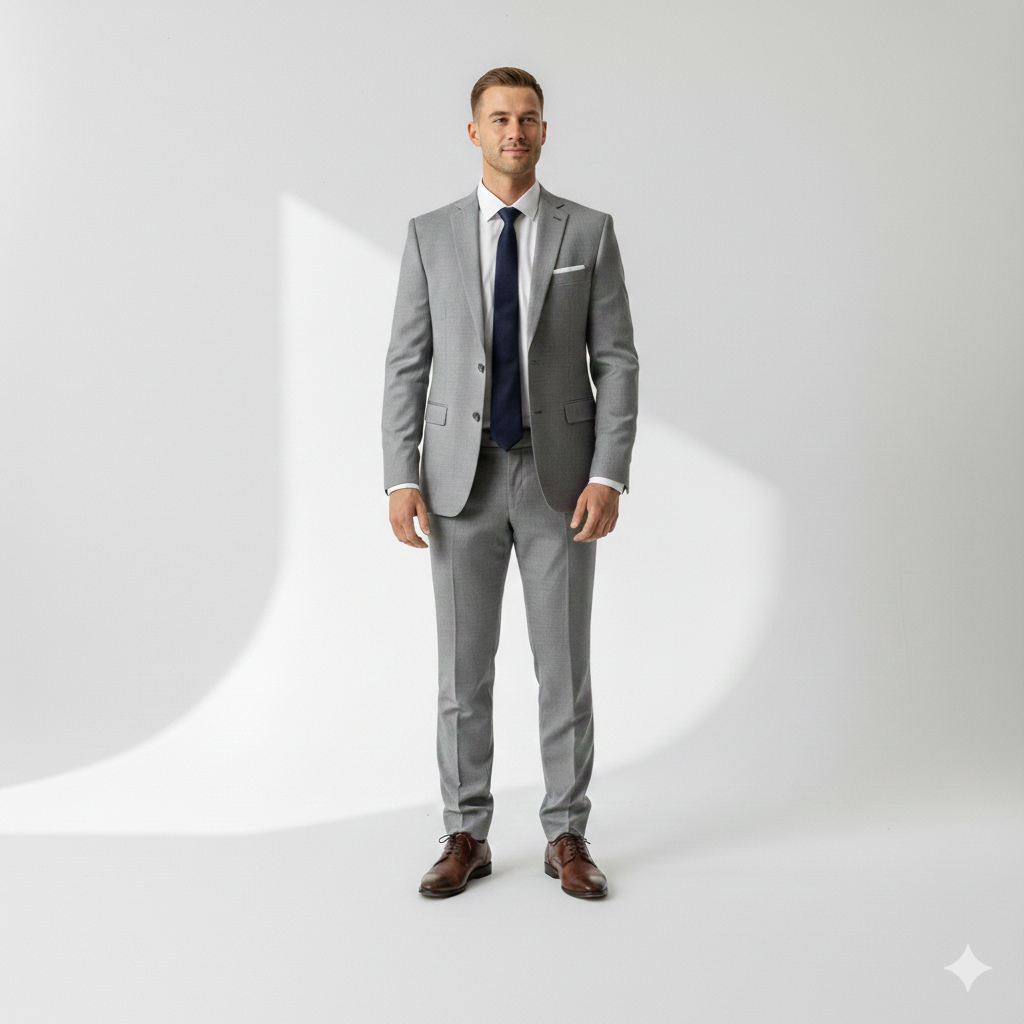
Direct eye contact creates trust and connection. Looking into the camera helps you appear open, reliable, and self-assured. Off-camera gazes are better suited for creative branding but are less effective for resumes and LinkedIn profiles.
Professional photos should look intentional and clean. Avoid exaggerated poses, dramatic angles, or trendy expressions. The focus should always remain on your face and presence—not on the pose itself.

The head-and-shoulders pose is the most universally accepted and safest option for professional use.
This pose frames your face and upper torso, keeping the image clean and distraction-free. It works well across industries, seniority levels, and platforms.
Why this pose works:
How to execute it properly:
This pose is ideal for corporate professionals, consultants, engineers, analysts, finance professionals, and anyone in a traditional or structured industry.

The slight angle pose adds dimension while maintaining professionalism. Instead of facing the camera straight on, your body is turned slightly while your face remains oriented toward the lens.
Why this pose works:
Best use cases:
Avoid turning too far sideways, as excessive angles can look casual or stylized rather than professional.

A seated pose conveys calm authority, stability, and experience when executed correctly. This pose is often used for executive headshots and senior leadership branding.
How to pose effectively:
Why it works:
This pose is particularly effective for executives, founders, consultants, and senior professionals building a strong personal brand.

The crossed arms pose can project confidence and authority, but it must be used carefully to avoid appearing closed-off or intimidating.
When this pose works:
When to avoid it:
This pose is best suited for leadership roles, technical experts, and professionals in authoritative or advisory positions.

A relaxed standing pose strikes a balance between professionalism and approachability. It is especially popular in modern workplaces and startup environments.
How to do it right:
Why this pose works:
This pose is suitable for marketing professionals, designers, founders, consultants, and professionals in flexible or innovation-driven industries.
Even the right pose can fail if paired with poor choices. Avoid the following mistakes:
Professional photos should look deliberate, polished, and appropriate for a workplace setting.
The background and framing of your photo directly impact its professionalism.
Avoid cluttered environments, strong shadows, or overly stylized backdrops.
While the same photo can often be used for both platforms, subtle differences matter.
When in doubt, choose a clean head-and-shoulders pose that works across both formats.
Your photo sends silent signals before anyone reads your qualifications:
Together, these elements shape how recruiters and employers perceive you.
You don’t need to look perfect—only professional, composed, and authentic. A well-chosen pose helps communicate who you are before a single word is read. When aligned with your industry and career goals, a strong professional photo becomes a powerful asset for LinkedIn profiles and resumes alike.
By focusing on posture, expression, framing, and simplicity, you can create a photo that supports your career rather than distracts from it.